


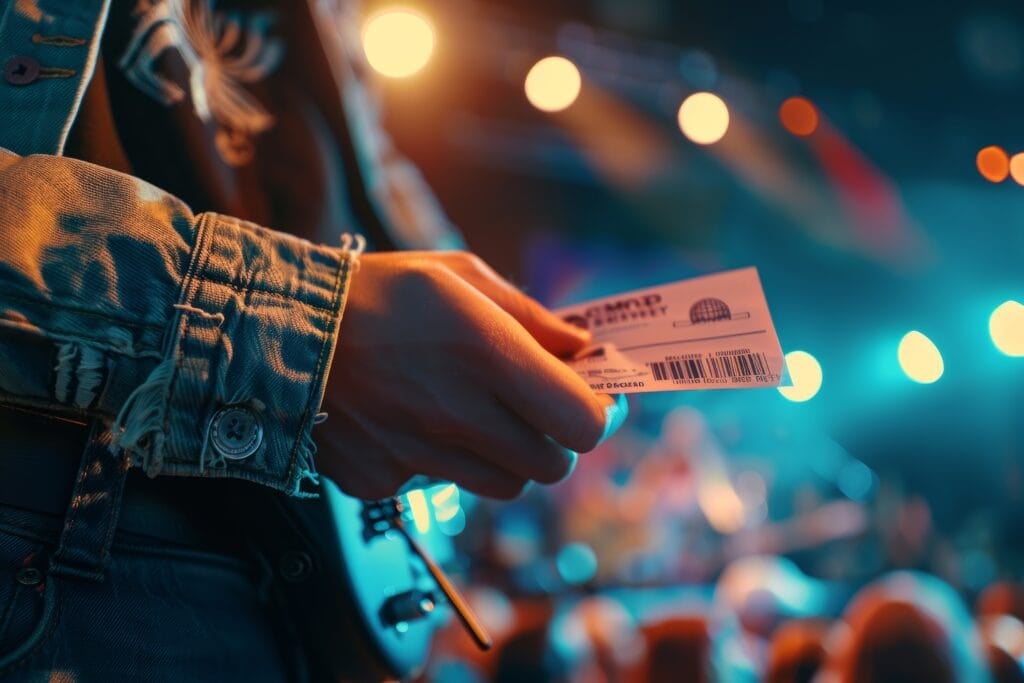
The ticketing industry in France has undergone a major transformation over the decades, reflecting technological advancements and changing consumer behavior. Once dominated by physical sales at dedicated outlets, it has gradually embraced digital technology, revolutionizing how spectators access their favorite events. The rise of online platforms, mobile applications, and social media has altered user expectations, making ticket purchases faster and more accessible. This article examines the various stages of this evolution, from early booking methods to recent innovations, while exploring the challenges and opportunities facing industry players. Discover how the ticketing industry is adapting to contemporary trends and new consumer demands, all while preserving the magic of the live experience.
The beginnings of ticket sales for shows in France
The origins of ticketing
Ticketing for live performances in France has deep roots, stretching back several centuries. The earliest forms of ticketing can be traced back to the Middle Ages, when public performances were offered by traveling theater troupes. These shows, often presented in public squares or at fairs, required a rudimentary payment system. Spectators often had to pay the artists or organizers directly, without any form of regulation or reservation system. During the Renaissance, with the emergence of permanent theaters like the Théâtre Français, ticketing began to take on a more structured form. Tickets, often hand-printed, allowed spectators to guarantee their seats, thus introducing a new dynamic in the way people attended performances.
The rise of performance venues
With the rise of theaters in the 17th and 18th centuries, ticketing underwent a true revolution. Theaters, such as the Paris Opera, began to use more advanced ticketing systems. Ticket booths were set up to sell tickets at different prices, depending on the proximity of the seats to the stage. This price stratification made performances accessible to a wider audience, from the nobility to the working class. Thus, ticketing became an instrument of democratization, transforming the act of attending a performance into a social experience. The idea that one could buy a seat to enjoy a performance became popular, paving the way for a culture of consuming live entertainment that continues to this day.
The first innovations in ticketing
In the 19th century, technological innovations began to transform the ticketing landscape. The invention of the telegraph allowed theaters to reserve seats more efficiently, and the printing press facilitated the mass production of tickets. Mail-order systems emerged, allowing theatergoers to order tickets without leaving home. Furthermore, the appearance of the first automated ticket machines at the end of the 19th century marked a significant step forward in the accessibility of live performances. These innovations not only simplified the purchasing process but also laid the foundation for an industry that would continue to evolve with technological advancements. The figures speak for themselves: during this period, ticket sales had quadrupled compared to previous decades, demonstrating the growing enthusiasm for live entertainment in France.
The impact of digital technologies on ticket sales
The transition to online ticketing
Ticketing for live performances in France has undergone a radical transformation with the advent of digital technologies. Previously, spectators queued outside the box offices of performance venues to secure a seat, a process that was often long and arduous. Today, with online ticket sales, this process has become as simple as a few clicks. For example, platforms like Fnac Spectacles and Ticketmaster have revolutionized the market by offering a wide range of options at their fingertips. In 2022, a study revealed that nearly 75% of ticket sales for live performances in France were made online, a figure that perfectly illustrates the scale of this shift. Consumers can now choose their seats, compare prices, and even take advantage of exclusive promotions, transforming the way they interact with cultural events.
Technological innovations and personalization
Technological innovations extend far beyond simply selling tickets. They also enable a more personalized customer experience. Thanks to recommendation algorithms, platforms like Eventbrite use users' purchase histories and preferences to suggest shows they might be interested in. This creates a tailored experience that attracts audiences, encouraging them to engage with more culture. Furthermore, the use of artificial intelligence in customer service, such as 24/7 chatbots, has simplified access to relevant event information, making the entire process smoother and more enjoyable. By listening to and adapting to consumer needs, ticketing professionals have leveraged these advancements to enrich the cultural experience.
Combating fraud and securing transactions
Another crucial aspect of the impact of digital technologies on ticket sales is security. With the rise of online sales, fraud has become a major concern for ticketing companies. Technologies such as blockchain offer a promising solution by enabling the verification of ticket authenticity and securing transactions. For example, some startups have already implemented blockchain-based ticketing systems, ensuring that each ticket is unique and traceable. This significantly reduces the risk of counterfeiting and reassures consumers. Simultaneously, the use of secure payment systems strengthens user trust, thus enabling wider adoption of digital platforms. This phenomenon perfectly illustrates how technological advancements can not only improve transaction efficiency but also protect the interests of both spectators and event organizers.
New trends in audience consumption
The rise of digital technology
In recent years, the way people experience live entertainment in France has been profoundly transformed by the rise of digital technology. Increasingly connected, audiences seek seamless and seamless experiences. Online platforms like Ticketmaster and Digitick have revolutionized ticket purchases, enabling instant booking anytime, anywhere. According to a recent study, nearly 70% of tickets for cultural events are now purchased online, attesting to this significant shift. Furthermore, mobile applications offer increased accessibility, allowing users to manage their bookings and access real-time event information. This paradigm shift underscores consumers' desire to move beyond a simple transaction and embrace an integrated experience, where every interaction with ticketing is part of a broader strategy.
Growing expectations regarding user experience
In a fast-paced world, audiences demand an optimal user experience when purchasing tickets. The current trend is to personalize this experience to meet each consumer's unique preferences. Features such as event recommendations based on browsing history or previous purchases are now commonplace. For example, some online platforms use algorithms to suggest shows likely to interest users, transforming the simple act of selling tickets into a tailored experience. Furthermore, price transparency has become a major issue; consumers are increasingly sensitive to hidden fees that can inflate the final cost of a ticket. All of this is contributing to a redefinition of the relationship between audiences and event organizers, creating a new paradigm focused on customer satisfaction.
The search for authenticity and local products
Today's audiences are also expressing a growing desire for authenticity and connection in their cultural choices. This quest is accompanied by a marked interest in local events, often perceived as more authentic and engaging. A study conducted by the Observatory of Cultural Practices revealed that 60% of French people prefer attending local shows rather than large international productions. This phenomenon reflects a need for connection with the community and support for emerging artists. Music festivals, amateur theater productions, and local art exhibitions are experiencing a resurgence in popularity, reflecting this trend. Consumers thus seem to be adopting a more conscious and thoughtful approach to their cultural consumption, seeking experiences that resonate with their values and identities. This dynamic is significantly impacting ticketing strategies, prompting organizers to rethink their offerings and align themselves with audience expectations.
The challenges of ticketing in the face of the health crisis
Immediate impact on ticket sales
The COVID-19 pandemic hit the live entertainment industry in France hard, causing a precipitous drop in ticket sales. Between March 2020 and the following summer, millions of spectators were deprived of concerts, theater performances, and sporting events. The figures speak for themselves: according to studies conducted by the Ministry of Culture, revenue from live entertainment plummeted by nearly 70% in 2020. This financial loss had a domino effect on the entire sector, jeopardizing the survival of venues, producers, and artists. Mass cancellations resulted in costly refunds, and ticketing companies found themselves in the eye of the storm, having to manage an unprecedented crisis while trying to maintain contact with an audience eager to rediscover the magic of live performances.
Adaptation and resilience of ticketing industry players
Faced with this crisis, ticketing companies have had to demonstrate remarkable resilience. Many quickly adapted their platforms to integrate flexible refund solutions and ticket exchange options, seeking to reassure anxious customers. For example, companies like France Billet launched transparent communication campaigns, clearly explaining refund procedures. Furthermore, the rise of digital technology allowed these companies to reinvent themselves: streaming shows emerged, enabling artists to stay connected with their audiences while generating revenue. This shift to digital became a lifeline for many creators, transforming a crisis into an opportunity to innovate and explore new business models.
Reinventing the spectator experience
The health crisis has also revolutionized how audiences approach the ticketing experience. The focus on safety and comfort has prompted organizers to rethink how events are experienced. Strict health measures, such as physical distancing and limited seating, have necessitated a reconfiguration of performance spaces. Furthermore, digitalization has enabled the introduction of e-tickets, thus reducing physical contact. Audiences have become accustomed to smoother online booking processes and contactless check-in options. Therefore, the crisis has not only altered audience expectations but has also ushered in a new era of events where the customer experience is paramount. In short, these challenges have driven the industry to evolve towards more flexible and secure solutions, thereby redefining the landscape of live event ticketing in France.
The future of ticketing for live entertainment: towards a personalized experience
An essential digital transformation
Digital transformation has become the driving force behind the evolution of live entertainment ticketing. Once dominated by traditional sales methods, ticketing has undergone a complete transformation with the emergence of online platforms. These platforms not only offer the possibility of purchasing tickets remotely, but also allow users to explore a multitude of personalized options. For example, sophisticated algorithms analyze users' purchasing behavior to suggest shows based on their preferences. This approach is akin to a chef preparing a custom dish, taking into account the tastes and allergies of their guests. According to a study conducted by the French National Center for Cinema and the Moving Image (CNC), nearly 60% of tickets are now purchased online, a statistic that testifies to the growing adoption of these technologies. Thus, live entertainment ticketing is transforming into a true meeting point between art and digital technology, where each spectator can enjoy a unique and personalized experience.
Personalization and audience loyalty
Personalization is at the heart of new ticketing strategies, enabling increased audience loyalty. These initiatives often take the form of loyalty programs where users accumulate points with each purchase, redeemable for tickets to future events. Imagine a theatergoer who, after several visits to their favorite venue, receives an exclusive invitation to a premiere or a meet-and-greet with the artists. This creates an emotional connection between the audience member and the institution, similar to that of a loyal bookseller who receives a signed book. Furthermore, platforms like Ticketmaster leverage purchase data to target offers, ensuring that each user receives relevant recommendations. A recent survey showed that theatergoers are 40% more likely to buy a ticket when presented with personalized recommendations, confirming the effectiveness of this customer-centric strategy.
An immersive and interactive experience
In the future, ticketing for live entertainment could move towards an even more immersive and interactive experience, integrating technologies such as augmented reality (AR) and virtual reality (VR). Imagine being able to "try out" a seat in a concert venue using an app that lets you visualize the stage from your seat before finalizing your purchase. This could revolutionize how concertgoers choose their seats, making the buying experience more engaging. Furthermore, some venues are considering introducing apps that allow audience members to vote on aspects of the show, such as the choice of a song to be performed or even the stage design. By integrating these interactive elements, ticketing is no longer limited to a simple act of purchase but becomes an engagement platform where each spectator can play an active role. Studies indicate that immersive experiences increase customer satisfaction by 50%, signaling a paradigm shift in the relationship between the audience and live entertainment.