


The Comédie-Française, a true monument of French theater, is distinguished by its ability to evolve while preserving the very essence of theatrical art. Among its landmark works, the adaptations of songs by Serge Gainsbourg, an emblematic figure of French chanson, offer a unique perspective on his complex world. This fusion of theater and music allows us to rediscover texts imbued with poetry and provocation, staged with remarkable audacity. Through this exploration, we will delve into Gainsbourg's universe, highlighting the productions inspired by his work at the Comédie-Française. How do these adaptations pay tribute to an artist whose legacy continues to influence generations? Each of these performances invites us to reassess the profound connection between stage and song, and to appreciate the richness of these interpretations. A celebration of art not to be missed.
History of the Comédie Française and its influence on French theatre
The origins of the Comédie Française
Founded in 1680 under the impetus of Molière and the troupe of the Hôtel de Bourgogne, the Comédie-Française is one of the pillars of French theater. At the time, theater was a mirror of society, and this institution has managed to evolve while preserving its essence. Early performances were often marked by a blend of tragedy and comedy, a balance that Molière himself mastered to perfection. This theatrical framework allowed talents like Serge Gainsbourg to explore complex themes, combining satire and social commentary. The Comédie-Française became the benchmark for playwrights, establishing standards that would influence the French theatrical landscape for centuries to come.
The Comédie Française through the ages
Throughout its history, the Comédie-Française has weathered periods of political and social upheaval, but it has always managed to adapt and reinvent itself. In the 19th century, the troupe established itself as a bastion of French culture, welcoming renowned writers and playwrights. The development of realism and naturalism influenced the way plays were written and performed, while also incorporating contemporary elements. In this context, the work of Serge Gainsbourg, although primarily musical, resonated with the innovative approach of the Comédie-Française. The troupe's performances were often a blend of lyricism and drama, reflecting the emotions that Gainsbourg captured in his songs.
The lasting influence on contemporary theatre
Today, the Comédie-Française continues to play a crucial role in preserving and promoting French theater. By embracing contemporary works and tackling modern themes, the company maintains a tradition of innovation. Their adaptations of Serge Gainsbourg's works, such as those presented at La Scala Provence, demonstrate this ability to transcend eras. Modern productions explore the nuances of Gainsbourg's texts while connecting them to current issues, thus creating a bridge between the past and the present. This dynamic allows the Comédie-Française to remain a key player, paving the way for new interpretations while honoring the legacy of giants like Gainsbourg.
Analysis of Serge Gainsbourg's work and his relationship with the stage
The complexity of Gainsbourg's lyrics
Serge Gainsbourg is renowned for the richness and complexity of his lyrics, which blend poetry, provocation, and a keen sense of observation. His work is often a canvas painted in shades of gray, where love, sensuality, and melancholy intertwine. For example, in songs like "Je t'aime… moi non plus," he manages to capture an emotional dynamic that is both passionate and conflicted. This duality makes his songs particularly well-suited to the stage, allowing directors like Stéphane Varupenne and Sébastien Pouderoux to reinterpret his works in a new light, while respecting the very essence of his message. Each performance thus becomes an exploration of human psychology, where the nuances of the lyrics are transformed into a vibrant and moving performance.
The interaction between music and stage
Gainsbourg's music is intrinsically linked to his stage presence, manifesting itself as a character in its own right within his creations. The way he blends diverse musical genres, from jazz to pop to reggae, creates a unique atmosphere that lends depth to the performances. Benjamin Lavernhe, an actor and singer who has participated in several adaptations of Gainsbourg's works, emphasizes that each note, each chord, is designed to evoke a particular emotion. Thus, when actors perform his songs, they don't simply sing; they embody the story, allowing themselves to be carried away by the melody while conveying the complex emotions that Gainsbourg so skillfully expressed. The musical arrangements, created by talents such as Guillaume Bachelé, enrich this experience, fostering a dialogue between the music and the stage performance.
Gainsbourg's legacy on the contemporary scene
Serge Gainsbourg's presence on the contemporary scene is undeniable and manifests itself through numerous artistic creations. His songs continue to inspire today's artists, who seek to capture the same essence of life and love. Recent productions at the Comédie-Française, such as those directed by Stéphane Varupenne and Sébastien Pouderoux, demonstrate how Gainsbourg's legacy endures and is constantly renewed. By reinterpreting his works, these directors pay homage to his rebellious spirit while adapting it to modern sensibilities. The audience's reactions, which range from nostalgia to discovery, testify to the unique impact Gainsbourg continues to have on the French stage, proving that his work transcends mere entertainment to become a genuine reflection on humanity.
Stage adaptations of Gainsbourg's songs: successes and challenges
The challenge of staging the songs
Adapting Serge Gainsbourg's songs for the stage is a monumental challenge. His music, rich in emotion and subtlety, demands a creative approach that respects the essence of the work while offering a fresh interpretation. For example, in a recent adaptation, Noam Morgensztern skillfully juggled humor and melancholy, two elements omnipresent in Gainsbourg's world. His challenge was to create an atmosphere that evokes the intimacy of the songs while integrating them into a theatrical narrative. By transforming iconic tracks like "Je t'aime… moi non plus," he found a way to capture the audience's attention while simultaneously evoking nostalgia and emotion. The visual elements, staging choices, and choreography became extensions of the emotions evoked by the lyrics, allowing the spectator to enjoy an immersive experience.
The role of the performers: Axel Auriant and Rebecca Marder
The performances of Axel Auriant and Rebecca Marder have contributed immensely to the success of the stage adaptations of Gainsbourg's songs. Auriant, with his natural charisma, manages to convey the passion and desire present in Gainsbourg's lyrics, resonating with the audience like a musical instrument. His voice, both sweet and powerful, blends seamlessly with the melodies, creating an authentic connection with the spectators. For her part, Rebecca Marder, with her raw sensitivity, injects emotional depth into each song she performs. Together, they form a dynamic duo that explores the complexities of romantic relationships, a recurring theme in Gainsbourg's work. Their chemistry on stage is palpable, and each performance becomes a delicate dance between love, heartbreak, and passion, inviting the audience to feel what is often difficult to express in words.
The success of the adaptations: a new audience for Gainsbourg
The success of theatrical adaptations of Gainsbourg's songs extends beyond the stage performances themselves, reaching new audiences. Thanks to bold directorial choices and performers like Morgensztern, Auriant, and Marder, younger generations are rediscovering Gainsbourg's work. These captivating shows attract spectators who might otherwise never have set foot in the Comédie-Française. By incorporating modern and contemporary elements into the staging, these adaptations manage to resonate with today's realities while preserving the timelessness of Gainsbourg's lyrics. For example, some productions utilize innovative video projections and sound effects, bridging the gap between past and present and transforming the theatrical experience into a true cultural event. The figures speak for themselves, with a significant increase in bookings for these shows, thus testifying to Gainsbourg's lasting impact on the contemporary scene.
Recent productions at the Comédie Française: a focus on works inspired by Gainsbourg
An innovative approach by Serge Gainsbourg
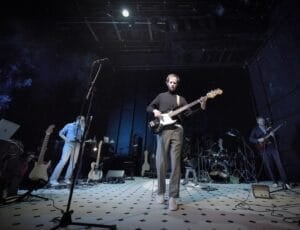
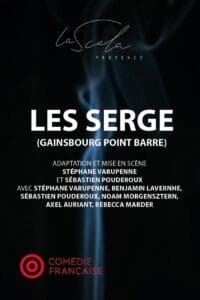
In the contemporary theatrical landscape, the Comédie-Française stands out for its bold choices, including its staging of Serge Gainsbourg's works. Under the artistic direction of Stéphane Varupenne and Sébastien Pouderoux, these productions transcend mere performance to become a true exploration of Gainsbourg's soul. For example, their adaptation "Les Serge (Gainsbourg point barre)" perfectly illustrates this approach. By bringing together several performers, they don't simply sing his songs, but immerse the audience in the complex and often contradictory world of the famous singer-songwriter. This approach allows us to rediscover Gainsbourg beyond his image as a provocateur, revealing his sensitivity and depth. Each performance becomes a vibrant tribute, an invitation to feel and understand the emotions hidden behind his words.
The cross-influences between music and theatre
The fusion of music and theater is at the heart of recent productions at the Comédie-Française. Gainsbourg's compositions, rich in melodies and evocative lyrics, offer fertile ground for stage interpretation. In "Les Serge," the musical arrangements crafted by artists such as Guillaume Bachelé and Martin Leterme amplify the emotional impact of the texts. Each note becomes a narrative tool, allowing the actors to take ownership of the songs and transform them into powerful theatrical moments. The set design, by Magdaléna Calloc'h, also plays a key role, creating a space where the audience feels immersed in Gainsbourg's aesthetic, oscillating between dream and reality. Thus, these shows transcend mere performance to become multisensory experiences.
The challenges of theatrical adaptation
Adapting Serge Gainsbourg's work for the stage is no easy feat. The complexity of his lyrics, brimming with cultural references, demands meticulous interpretation. Directors Stéphane Varupenne and Sébastien Pouderoux face the daunting task of respecting Gainsbourg's essence while offering a contemporary vision. This requires a delicate balance between innovation and fidelity. Audience feedback reflects an appreciation for this approach but also highlights the risk of misinterpreting his work. By incorporating bold staging elements and informed artistic choices, the Comédie-Française succeeds in creating productions that, while respecting Gainsbourg's legacy, invite a rediscovery of his creative genius.
The Comédie Française today: its role in preserving Gainsbourg's legacy
The living legacy of Serge Gainsbourg
The Comédie-Française, an iconic institution of French theater, plays a crucial role in transmitting Serge Gainsbourg's cultural legacy. By integrating his musical and poetic works into their contemporary productions, the Comédie-Française troupe allows new generations to discover not only Gainsbourg's music, but also his impact on the theatrical stage. This approach is comparable to a conductor who, while respecting the original compositions, reinvents the interpretations to captivate a modern audience. Thus, each performance becomes a resonance of the emotions conveyed by Gainsbourg, an echo that recalls the tumult of love, passion, and provocation.
Recent shows and Gainsbourg's interpretation
Recent productions, such as those directed by Stéphane Varupenne, demonstrate this desire to revitalize Gainsbourg's work. For example, the creation of shows at La Scala Provence illustrates how Gainsbourg's songs can be adapted with theatrical sensibility, creating an immersive atmosphere that encourages audiences to rediscover his world. By incorporating innovative visual and narrative elements, the Comédie-Française company transcends mere homage to offer a dynamic experience. Each song becomes a scene in its own right, where the actors embody both the characters in the lyrics and the emotions in the melodies, thus uniting theater and music in a captivating narrative dance.
A collective movement for the preservation of culture
The Comédie-Française does more than simply present Gainsbourg's work; it actively participates in a collective movement to preserve French culture. By collaborating with contemporary artists and integrating modern visions into its productions, the Comédie-Française acts as a bridge between the past and the present. This is particularly evident in projects that bring together diverse talents, reinforcing the idea that Gainsbourg's work is not static, but can evolve and reinvent itself. Performances inspired by Gainsbourg are often accompanied by discussions and talks, creating a platform to explore his influence on contemporary culture, while also engaging the audience in a reflection on art and society.


Rental: https://www.billetnet.fr/evenement/comedie-francaise-les-serge-gainsbourg-point-barre-2/